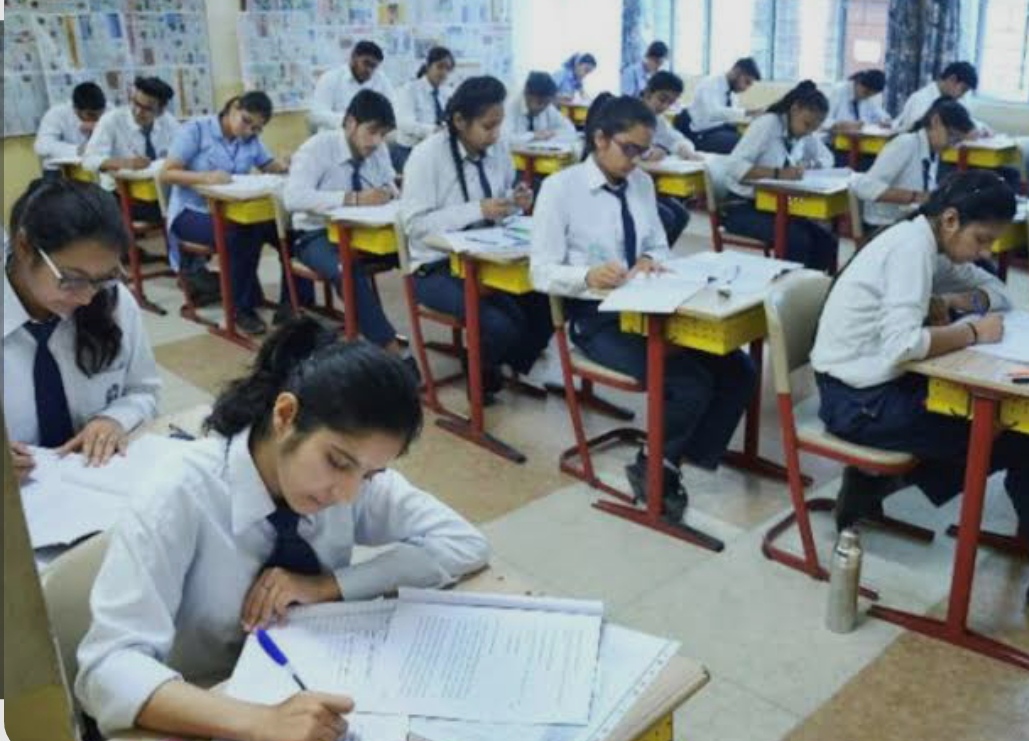
Last evening, when I met my younger brother Abbas Mukherji, his life’s purpose and perspective left a profound impact on me. Abbas, who embraced Islam, has dedicated his life to education and social service. He teaches Physics, Chemistry, and Mathematics to 10th and 12th-grade students at a school, while also donating 70% of his salary to cover fees, books, and other necessities for underprivileged children. Beyond this, he runs free coaching classes and promptly resolves students’ academic doubts via mobile phone.
When I met him, he was holding mathematics books. As we sipped tea together, he was busy checking students’ notebooks. Seeing his dedication, I asked about the academic progress of children from the Shia community. Taking a deep breath, Abbas said, “The kids are doing well in studies, but during Muharram, they spend so much time in majlis, shabdaari, and anjuman that some neglect their studies. A few dedicate so much time to these events that they have no time left for studies, resulting in failure.”
Hearing this, I asked, “What’s the solution? How can children balance studies and technical education with these commitments?” Abbas, in a serious and thoughtful tone, proposed two solutions. First, he suggested that students in crucial classes like 10th and 12th should be completely excused from participating in religious programs. He said, “Maulanas should encourage children to focus on studies instead of calling them forward in majlis. They should say, ‘Go home, complete your studies, and pass your exams. This is the true purpose of Imam Hussain’s martyrdom—to ensure our community’s children excel through education.’” He added, “Our Quran’s first command is ‘Iqra,’ meaning ‘Read.’”
For his second solution, Abbas proposed that only educated individuals—scholars in subjects like Physics, Chemistry, Mathematics, English, Hindi, or Computers—should participate in anjuman and majlis. They should inspire children by teaching core subjects before majlis during exam times, followed by sineh-zani and matam to pay tribute to Imam Hussain.
His words angered me initially. I said, “We’ve dedicated our lives to Imam Hussain. How can you say this?” Abbas, calm yet firm, replied, “Brother, we need to think about what Imam Hussain truly wants from us. Will mere shabdaari, matam, and majlis please him? No! Imam Hussain’s purpose was to fight for truth, justice, and humanity. In today’s world, this fight is through education. If our children become doctors, engineers, or teachers and serve the community with their knowledge, that’s the true way to honor Imam Hussain’s martyrdom.”
Abbas’s words made me reflect deeply. I began to agree that education is the path to fulfilling Imam Hussain’s mission. The martyrdom of Karbala teaches us to stand for truth and justice in all circumstances. Today, this fight is incomplete without education and knowledge. If our children excel academically and contribute to society, they can serve humanity in the name of Imam Hussain and the martyrs of Karbala.
Abbas patiently addressed my anger and objections with love. His words carried no rigidity or intent to hurt anyone’s sentiments. His sole aim was to prioritize education for our community’s children, enabling them to build a better future for themselves and society. I don’t want anyone reading my objections to feel offended. We are all followers of Imam Hussain, and the best way to honor his martyrdom is to educate our children, make them self-reliant, and contribute to society’s welfare.
In conclusion, I’d like to say that discouraging 10th and 12th graders from excessive participation in religious programs isn’t against faith. It’s a way to strengthen Imam Hussain’s mission. Let’s ensure our children prioritize education, achieve success, and use their knowledge for the betterment of society. This is the true way to honor Imam Hussain’s sacrifice.
*Shabu Zaidi*
7617032786 🙏
*Apologies for any offense caused.*