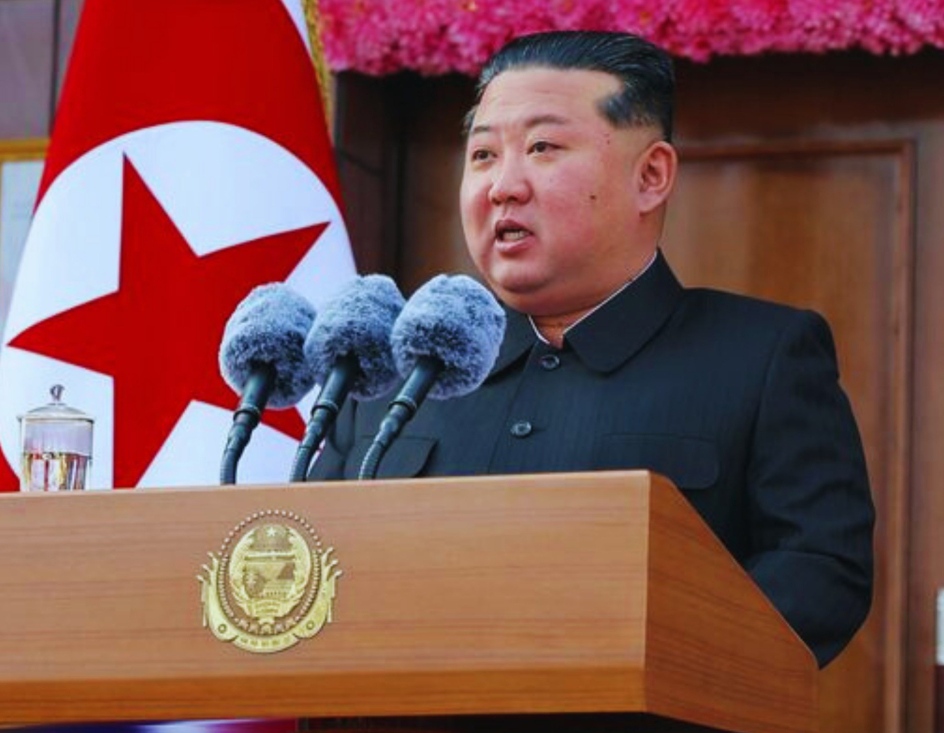
Pyongyang, March 18, 2026 (News Agency Report): In the recently held parliamentary elections in North Korea, the ruling Workers’ Party of Korea (WPK) and its allied parties have once again achieved a resounding victory. According to the country’s official state media, a total of 99.99 percent of voters participated in the voting conducted on March 15, out of which 99.93 percent supported the nominated candidates. Only 0.07 percent of the votes were cast against them. ��With this historic win, all 687 seats in the Supreme People’s Assembly (SPA) have gone to the ruling coalition. These elections were held to select deputies for the 15th Supreme People’s Assembly, which is North Korea’s highest legislative body. Following the announcement of the voting results, the first meeting of the new assembly in Pyongyang is expected to be convened soon. This meeting will involve the election of new state leadership and deliberations on significant amendments to the socialist constitution. ��Kim Jong-un’s Return and Expectations of Constitutional ChangesThere is a strong likelihood that Kim Jong-un will be re-elected as the Chairman of the State Affairs Commission (SAC) in the initial meeting of the new Supreme People’s Assembly. According to reports from the Korean Central News Agency (KCNA), this meeting will include the election of the State Affairs President of the Democratic People’s Republic of Korea (DPRK) and decisions on necessary changes to the constitution. This session is taking place right after the Workers’ Party’s Ninth Congress concluded last month, signaling further strengthening of Kim Jong-un’s leadership. �Hostile Policy Towards South Korea in the Constitution?International experts believe that this meeting may officially incorporate North Korea’s hostile policy towards South Korea into the constitution. Under this, both Korean states could be defined as ‘enemy states’ towards each other. This step would provide a solid foundation for North Korea’s militarization and regional tension-inducing policies. Experts say this change reflects the ideological firmness of the Kim regime, especially after the increased nuclear tests and missile launches in recent years. �North Korea’s such elections are viewed worldwide as ‘rubber-stamp’ or mere formalities, where there is no provision for nominating opposition candidates. Nevertheless, official figures always show unprecedented support, symbolizing the unity of the regime. Eyes are now on the new assembly’s meeting, as it could bring major changes to North Korea’s internal and external policies. ��
North Korea: Kim Jong-un’s Party Secures Landslide Victory in 2026 Parliamentary Elections, Grabs All 687 Seats with 99.93% Votes –
Previous Article Next Article
कनाडा PM मार्क कार्नी की ईद नमाज के लिए 3,000+ स्थानों की ऐतिहासिक व्यवस्था
Trump’s Hormuz Strait Security Appeal Faces French Rejection: Aid Only After War Ends –