



Voices Are Built Through Public Participation, Not Closed-Door Meetings
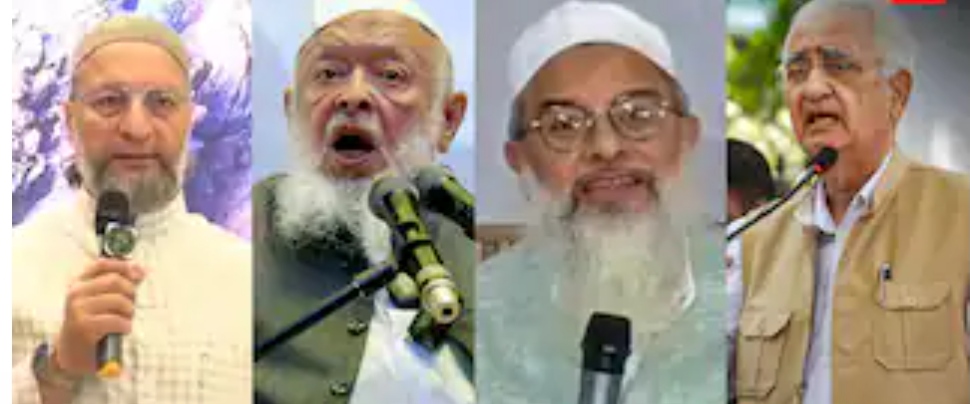
On 24 July 2026, the Indian Muslims for Civil Rights (IMCR) organized a high-level meeting at the Constitution Club in New Delhi to deliberate on key issues such as the Uniform Civil Code (UCC), the Waqf Amendment Act, bulldozer actions, mob lynching, and other concerns affecting the Muslim community. Several political leaders and representatives of Muslim organizations attended the conference.
However, an important question arises: can issues affecting millions of people truly be resolved through meetings held behind closed doors?
There was also discussion on social media that the conference would provide a platform for Muslim women to share their personal experiences regarding issues such as triple talaq, the burqa, and restrictions on entering colleges and universities while wearing the hijab or burqa. Had such voices been meaningfully included, the discussion could have become more representative and impactful. However, based on publicly available information, it is not clear to what extent this actually took place.
Another significant aspect is the timing of the meeting. At the same time, students had been protesting for an extended period at Jantar Mantar in New Delhi over the paper leak controversy, demanding the resignation of Education Minister Dharmendra Pradhan. Young people were on the streets in many states and cities across the country. In such a situation, expecting the government to respond immediately to the resolutions of a single conference does not appear very realistic.
History shows that major public issues are not resolved through meetings in hotels, conference halls, or closed rooms alone. Strong public opinion is built through dialogue, organization, and participation at the grassroots level—in villages, towns, districts, and states.
If the real objective is to raise the constitutional and social concerns of the Muslim community effectively at the national level, the process should begin with broad consultations across states and districts. These meetings should include social activists, women, youth, academics, lawyers, religious scholars, and elected representatives from both the ruling party and the opposition. Resolutions emerging from such inclusive participation would carry greater legitimacy and public support.
In any democracy, the strength of a movement is determined not merely by the leaders present on the stage but by the participation of the people. Therefore, if the purpose of this conference was genuinely to advance public interest, it would have been more effective as part of a broader public dialogue and mass movement. It is difficult to expect a single closed-door meeting to produce a decisive impact on issues of such magnitude.