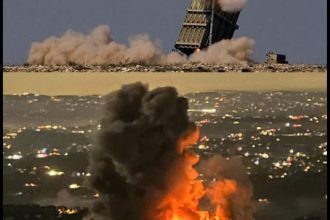
Tensions in the Middle East have escalated sharply. Reports have emerged that a Japanese ship has passed through the Strait of Hormuz, while airstrikes by the United States and Israel on Iran are said to be continuing. At the same time, Hezbollah carried out its first large-scale missile attack on Israeli military positions, making the situation in the region even more serious.
Why the situation worsened
The Strait of Hormuz is one of the most important sea routes in the world. It carries oil and cargo ships whose movement affects the global economy. In such a setting, any military tension—especially between the U.S., Israel, and Iran—raises international concern.
According to reports and sources, air attacks against Iran are continuing, while Hezbollah has targeted Israeli military bases. This is being seen as one of the biggest retaliatory actions so far.
Hezbollah’s attack
Reports say Hezbollah fired missiles at Israeli military centers. It is being described as the first time such a large-scale attack has been carried out, putting Israel’s security system on high alert. After the strike, panic spread in border areas, and reports of damage also surfaced.
Airstrikes on Iran
On the other side, reports indicate that the United States and Israel carried out airstrikes on Iran. Following these attacks, tensions in the region have risen further. Iran has also taken a firm stance, warning that if attacks on it or its allies continue, its response will become even stronger.
Importance of the Hormuz route
There has been tension over ships passing through the Strait of Hormuz before as well. News of a Japanese ship passing through suggests that the sea route remains sensitive. If this tension continues for long, it could affect oil prices, trade, and the global supply chain.
Regional impact
The growing confrontation involving Iran, Israel, Lebanon, and nearby countries will not remain limited to the military sphere. It could seriously affect civilian safety, peace in border areas, and international trade. West Asia once again appears to be moving toward a major crisis.
Japanese Ship Leaves the Strait of Hormuz; U.S.-Israeli Airstrikes Continue on Iran; Hezbollah Launches First Missile Attack on Israel
Previous Article Next Article
दिल्ली-एनसीआर और कश्मीर में भूकंप के झटके, नुकसान नहीं; भविष्य के लिए सतर्क रहने का संदेश
ठुकरा के मेरा प्यार, इंतकाम देखेगी! SDM ज्योति मौर्य के पति आलोक ने UPPSC इंटरव्यू पास किया, फिल्मी कहानी बनने को तैयार!”