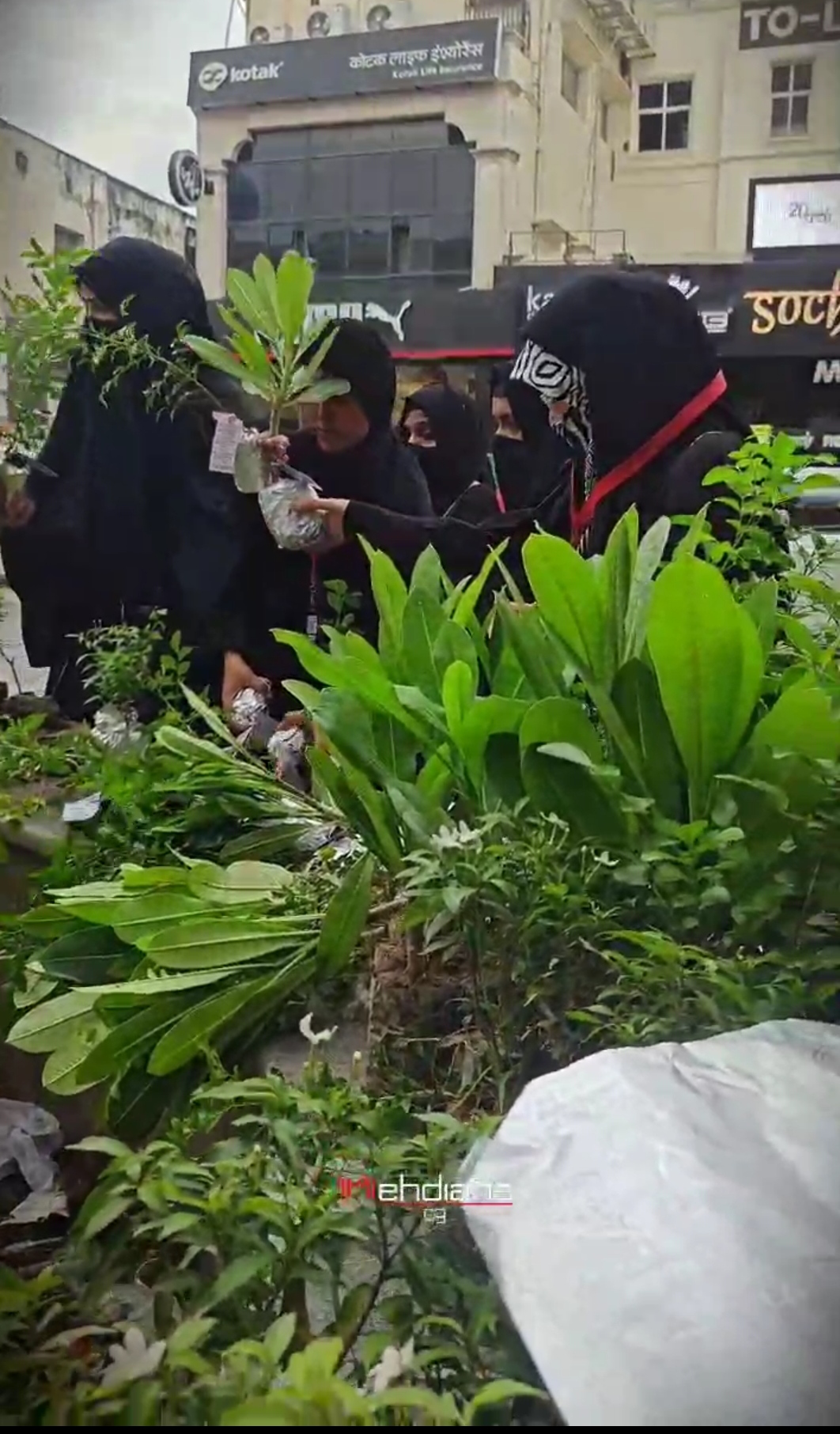
Islam places immense importance on environmental protection and tree plantation. The Quran, the sayings of Prophet Muhammad (PBUH), and the teachings of Imam Ali (A.S.) inspire us to safeguard nature and promote greenery. Trees and plants are not only a beautiful part of Allah’s creation but also lifelines for humanity, animals, and the environment. Let us initiate a widespread tree plantation campaign, grounded in these sacred teachings, to promote greenery on religious, social, and political levels.
### **The Quran: Nature, a Sign of Allah**
The Quran presents the environment as a sign (ayat) of Allah, entrusting us with the responsibility to care for it. Some key verses include:
– **Surah Taha (20:53)**:
*“He is the One who made the earth a cradle for you and provided pathways for you in it, and sent down rain from the sky, and We brought forth pairs of various plants.”*
This verse highlights the diversity of plants and their vital role in sustaining life.
– **Surah Al-An’am (6:99)**:
*“And it is He who sends down rain from the sky, and We produce thereby every kind of vegetation and bring forth green shoots…”*
This verse portrays greenery as a divine blessing that sustains human life.
– **Surah Ar-Rahman (55:6)**:
*“And the stars and trees prostrate [to Allah].”*
This verse depicts all elements of nature as engaged in worship, fostering a sense of respect and responsibility toward the environment.
The Quran teaches that plants are not merely physical resources but part of Allah’s creation, providing food, shade, and oxygen to humanity.
### **Prophet Muhammad (PBUH): Tree Plantation, a Continuous Charity**
Prophet Muhammad (PBUH) described tree plantation as a virtuous act and a form of continuous charity (sadaqah jariyah). His sayings inspire environmental conservation:
– **Hadith (Sahih Bukhari: 2320)**:
*“Whenever a Muslim plants a tree or sows seeds, and then a bird, a human, or an animal eats from it, it is regarded as a charitable act for them.”*
This hadith emphasizes that planting trees benefits humanity, animals, and the environment, earning continuous rewards.
– **Hadith (Al-Silsilah tus Sahih: 1228)**:
*“If the Day of Judgment is approaching and one of you has a sapling in hand, and there is time to plant it before the Hour arrives, then plant it.”*
This hadith underscores the importance of tree plantation even in the final moments.
– **Hadith (Musnad Ahmad)**:
*“Whoever plants a tree, Allah records for them as much reward as the fruit it yields.”*
This hadith establishes tree plantation as a long-term virtuous act.
The Prophet’s (PBUH) teachings highlight that tree plantation is significant not only for the environment but also for spiritual and social benefits.
### **Imam Ali (A.S.): Guardian of the Environment**
Imam Ali (A.S.), the cousin and son-in-law of Prophet Muhammad (PBUH), considered environmental protection a religious and social duty. Some of his sayings include:
– **In Nahj al-Balagha**:
*“Plant trees, for they benefit you and your future generations.”*
This statement emphasizes long-term environmental care for future generations.
– **Protection of Trees**:
During his caliphate, Imam Ali (A.S.) promoted agriculture and greenery. He instructed his governors not to harm trees, once stating:
*“Do not cut down trees, for they are Allah’s blessings and provide shelter for living beings.”*
– **Nature and Humanity**:
Imam Ali (A.S.) said:
*“Protecting nature is the duty of every human, as it is part of Allah’s creation and one of His signs.”*
He took practical steps like maintaining date orchards and improving irrigation systems.
Imam Ali’s (A.S.) teachings advocate for a balance between nature and humanity, inspiring us to protect the environment.
### **Tree Plantation: A Call for a Collective Campaign**
Based on the teachings of the Quran, Prophet Muhammad (PBUH), and Imam Ali (A.S.), we can launch a large-scale tree plantation campaign. The following suggestions can help implement this campaign on religious, social, and political levels:
1. **Tree Plantation at Homes**:
Every Muslim family should pledge to plant at least one tree at home. This will not only improve the environment but also revive the Sunnah of the Prophet (PBUH). Small plants like basil, neem, or fruit-bearing trees can be planted in courtyards or pots.
2. **Distributing Plants in Religious Gatherings**:
During Muharram, Eid, or other religious occasions, plants should be distributed as tabarruk (blessed gifts) in gatherings. For example, in Aligarh, tree plantation programs were organized during Muharram in memory of Imam Hussain (A.S.). This should become a tradition, where each attendee receives a sapling to plant at home or in their neighborhood, linking religious events with environmental conservation.
3. **Tree Plantation in Political Conventions**:
Political parties organizing large conventions should distribute saplings to their workers as an incentive. Each worker could be given a tree to plant in their home, street, or locality. Those who plant the most trees could be rewarded with recognition or higher positions within the party. This will benefit the environment and connect political activities with social welfare.
4. **Awareness in Mosques and Schools**:
During Friday sermons, mosques should spread the message of environmental protection based on the Quran and Hadith. Schools should educate children about tree plantation and encourage them through projects like “One Child, One Tree.”
5. **Community Tree Plantation Campaigns**:
Muslim and other communities should come together for collective tree plantation drives. Trees should be planted on vacant lands in villages, towns, and cities, involving local scholars, social organizations, and youth.
### **Modern Context and Inspiration**
In today’s era, when climate change and environmental pollution are pressing challenges, Islamic teachings offer a path forward. In cities like Aligarh, religious scholars have linked tree plantation during Muharram to the Sunnah of the Prophet (PBUH) and social responsibility. Such efforts need to be promoted on national and global levels.
### **Conclusion and Pledge**
The teachings of the Quran, Prophet Muhammad (PBUH), and Imam Ali (A.S.) emphasize that environmental protection and tree plantation are religious and social duties. Every tree we plant not only cleans and beautifies the environment but also becomes a means to earn Allah’s pleasure and follow the Prophet’s (PBUH) Sunnah.
Let us all pledge:
– **One Tree per Household**: Every family should plant at least one tree at home.
– **One Sapling per Gathering**: Distributing plants in religious gatherings should become a tradition.
– **Every Worker, a Soldier of Greenery**: Political and social organizations should make tree plantation a part of their campaigns.
Adopt the message of **“Every Plant, a Virtue”** and lay the foundation for a greener, healthier, and spiritually enriched future. May Allah grant us success in this noble endeavor. Ameen.