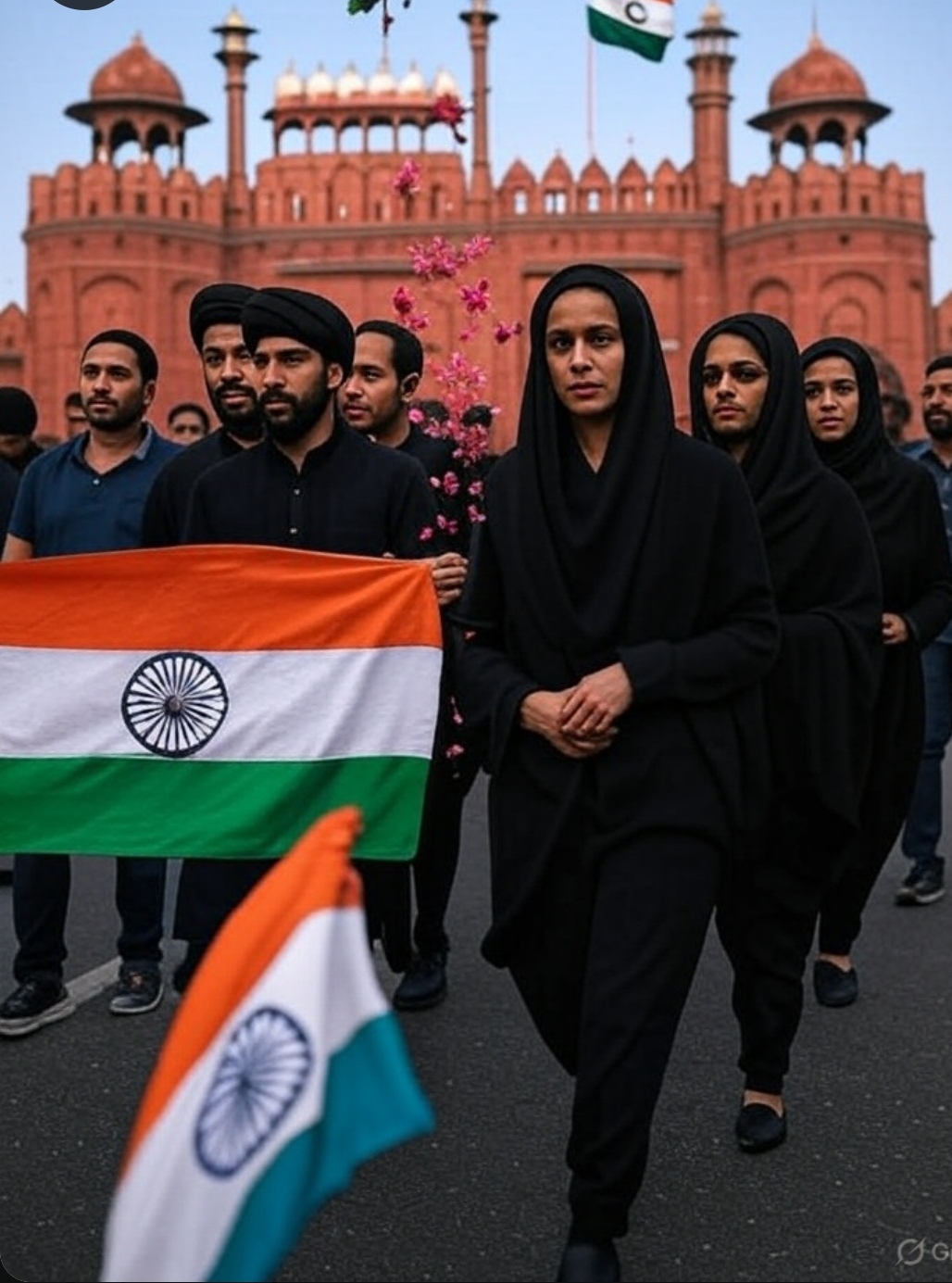
On August 15, 1947, India attained freedom from British rule, and today we celebrate our 79th Independence Day. This day not only symbolizes the sacrifices of Indian freedom fighters but also serves as an opportunity to recall the inspirations that gave them the strength to fight against oppression and injustice. One such profound inspiration was the martyrdom of Imam Hussain and his 72 companions in the Battle of Karbala. As we commemorate both Independence Day and the Chehlum of Imam Hussain (the 40th day of mourning his martyrdom) today, it is fitting to reflect on the perspectives of Indian leaders who drew inspiration from Imam Hussain’s sacrifice. This article explores the connection between the martyrdom of Karbala and the Indian freedom struggle through the thoughts of Mahatma Gandhi, Pandit Jawaharlal Nehru, Sardar Vallabhbhai Patel, and Maulana Abul Kalam Azad.
**The Martyrdom of Karbala: A Symbol of Truth and Justice**
The Battle of Karbala, which took place on 10 Muharram 61 Hijri (October 10, 680 CE) in the plains of Karbala, Iraq, is a pivotal event in Islamic history that established a symbol of resistance against oppression and injustice. Imam Hussain, the grandson of Prophet Muhammad, refused to pledge allegiance to Yazid’s tyrannical and un-Islamic rule. Despite facing extreme hardships, including a lack of water and food for three days, Imam Hussain and his 72 companions stood firm against Yazid’s vast army and sacrificed their lives for the sake of truth and justice. This sacrifice not only inspired the Muslim community but also taught humanity the lesson of standing resolute for truth and justice at any cost.
**Mahatma Gandhi and the Inspiration of Imam Hussain**
The Father of the Nation, Mahatma Gandhi, regarded Imam Hussain’s martyrdom as a significant source of inspiration for his non-violent struggle. Gandhi said, “I learned from Hussain how to achieve victory while being oppressed. The progress of Islam does not depend on the use of the sword, but on the sacrifice of Hussain, who was a great saint.” He also remarked, “If I had 72 companions like Hussain, I would have freed India from the British within 24 hours.” Gandhi saw the event of Karbala as a symbol of sacrifice for truth and non-violence and incorporated its spirit of steadfastness and courage into his strategy of Satyagraha. The imprint of Imam Hussain’s resolve and bravery is evident in Gandhi’s philosophy of non-violent resistance.
**Pandit Jawaharlal Nehru and the Impact of Karbala**
India’s first Prime Minister, Pandit Jawaharlal Nehru, also considered Imam Hussain’s martyrdom an event that serves as an inspiration for humanity. In his book *Glimpses of World History*, Nehru referenced the Battle of Karbala, writing that Imam Hussain’s sacrifice is an invaluable example of standing for truth and justice. He stated, “Hussain’s sacrifice teaches humanity that it is the duty of every individual to fight for truth and not bow before injustice.” Nehru used the story of Karbala to promote unity and the spirit of sacrifice in the Indian freedom struggle, emphasizing that freedom must be achieved not only physically but also mentally and morally.
**Maulana Abul Kalam Azad and Imam Hussain**
Maulana Abul Kalam Azad, a prominent freedom fighter and scholar, regarded Imam Hussain’s martyrdom as an eternal sacrifice for Islam and humanity. In his speeches and writings, Azad frequently referred to the event of Karbala, describing it as a symbol of the struggle against injustice. He said, “Imam Hussain’s martyrdom teaches us that fighting and sacrificing for truth is an inspiration for every religion and community.” Azad utilized the story of Karbala to foster Hindu-Muslim unity in the Indian freedom struggle, presenting it as a symbol of the fight for truth and justice for all communities.
**Karbala’s Inspiration in the Indian Freedom Struggle**
The martyrdom of Karbala played a significant role in the Indian freedom struggle. The sacrifice of Imam Hussain and his companions taught Indian leaders and the masses that in the fight against oppression and injustice, numbers do not matter as much as determination and loyalty to truth. The inspiration of Imam Hussain’s martyrdom is reflected in Gandhi’s non-violence, Nehru’s unity, Patel’s discipline, and Azad’s intellectual rigor. This inspiration united Indians and gave them the strength to fight against British rule collectively.
**The Confluence of Chehlum and Independence Day**
Today, as we celebrate India’s 79th Independence Day on August 15, 2025, it coincides with the Chehlum of Imam Hussain. This unique convergence reminds us of the deep connection between freedom and sacrifice. Chehlum, which marks the 40th day of mourning for Imam Hussain and his companions, reinforces the significance of their sacrifice. This day also teaches us that freedom is not only political but also social and moral.
**Conclusion**
The martyrdom of Imam Hussain and the martyrs of Karbala provided Indian freedom struggle leaders with inspiration for truth, justice, and sacrifice. Leaders like Mahatma Gandhi, Pandit Jawaharlal Nehru, Sardar Vallabhbhai Patel, and Maulana Abul Kalam Azad viewed this sacrifice not only as part of Islamic teachings but also as a universal message for humanity. As we celebrate Independence Day and Chehlum together, it is an opportunity to remember both Imam Hussain’s sacrifice and the sacrifices of the Indian freedom struggle. This confluence teaches us that the fight for truth and justice is never-ending, and we must always be prepared to uphold it.