






the Nuclear Program the Real Issue, or Are Oil and Natural Resources at the Center of Global Politics? By Shabu Zaidi
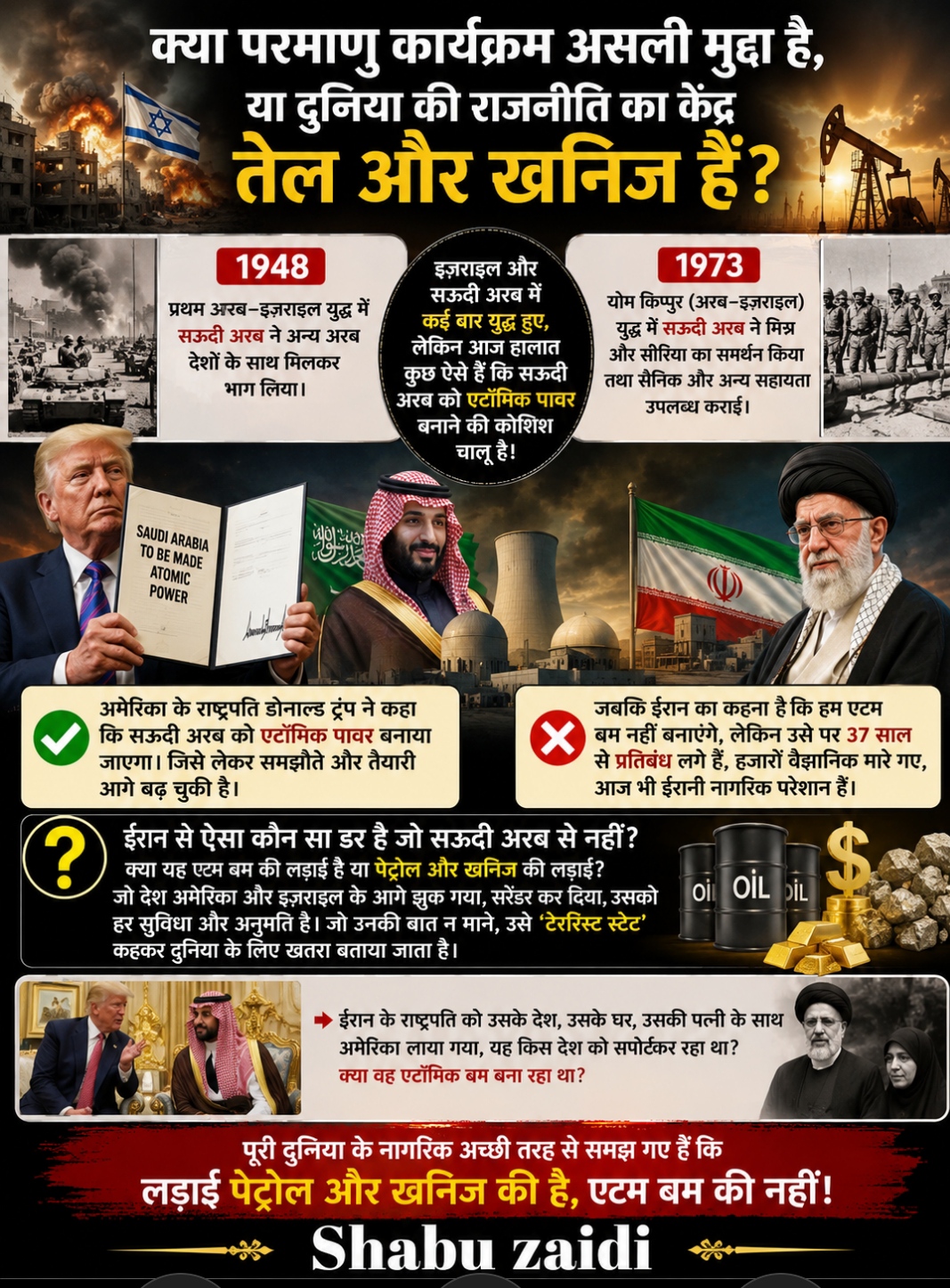
During the 1948 Arab–Israeli War and the 1973 Yom Kippur War, Saudi Arabia joined other Arab nations in opposing Israel. Times have changed, and today Saudi Arabia is regarded as one of the United States’ key strategic partners.
During President Donald Trump’s administration, efforts were made to advance civilian nuclear cooperation with Saudi Arabia. On the other hand, Iran has faced decades of sanctions, political pressure, and military tensions. Iran has consistently maintained that its nuclear program is intended for peaceful purposes, while the United States and several Western countries have remained skeptical of those claims.
This raises an important question: if nuclear technology can be considered acceptable for one country, why is similar technology viewed as a global threat when pursued by another? Is the debate really about nuclear programs, or is it also driven by broader geopolitical interests, including oil, natural resources, strategic influence, and regional power?
Many analysts argue that energy resources and strategic interests play a central role in the politics of the Middle East. At the same time, the United States and its allies maintain that their policies are aimed at preventing nuclear proliferation and preserving regional and international security.
Today, people around the world view these developments through different perspectives. As a result, the debate continues over whether global conflicts are primarily driven by security concerns or by geopolitical and economic interests.