




Ujjain’s Shahi Jama Masjid: 3 Feet of an Over 100-Year-Old Mosque Falls Within the Road Widening Project, High Court Rejects Mosque Committee’s Plea for Stay
Ujjain | Shabu Zaidi
Only Three Feet of Shahi Jama Masjid to Be Removed, But Questions Remain Over Its History and Land
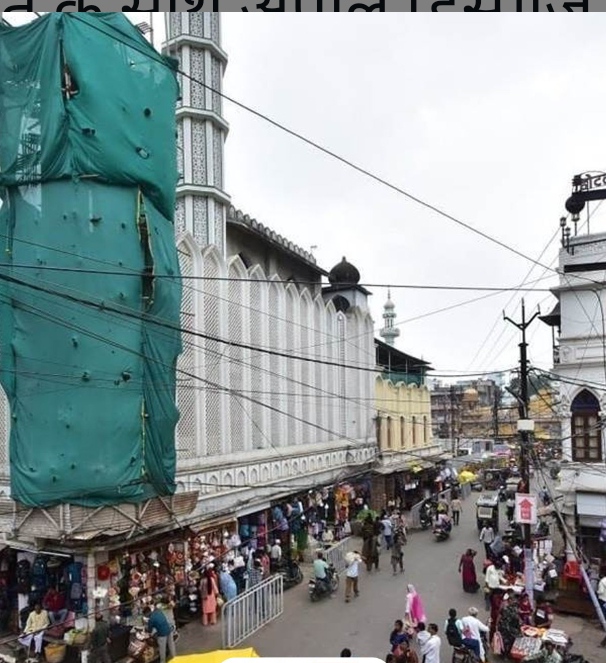
Ujjain’s Shahi Jama Masjid has become a subject of widespread discussion over the proposed road-widening project. A division bench of the Madhya Pradesh High Court at Indore has dismissed the appeal filed by the mosque committee and refused to stay the road-widening action. According to advocate Arshad Warsi, representing the Muslim side, the court has clarified that only around three feet of the religious structure will be removed. Earlier, reports had also indicated discussions between the municipal corporation and the mosque committee regarding compensation in the form of FAR and TDR for the affected portion.
The dispute began in connection with preparations for Simhastha 2028. The plan involves widening the approximately 900-metre-long road from Kanthal Square to Gopal Temple in Ujjain to 15 metres. According to the municipal corporation, around 39.33 square metres of the mosque structure falls within the proposed road alignment. The administration says the action is being undertaken in view of the master plan and traffic-management requirements.
How Old Is Shahi Jama Masjid?
The history of the mosque is one of the most discussed aspects of the controversy. The mosque committee and members of the Muslim community claim that the mosque was built around 1390 AD, which would make it approximately 636 years old. However, available court-related reports and administrative records generally describe it as a structure that is more than 100 years old. Therefore, the claim that it is 636 years old remains a historical claim made by one side, and no independently conclusive record establishing this age has been found so far.
Some reports have attempted to link its construction to the early Sultanate period of Malwa and to Dilawar Khan Ghuri. However, the available material does not provide clear evidence establishing that the mosque was directly built by Dilawar Khan Ghuri. Therefore, it would not be appropriate to present this as an established fact.
1925 Documents and the 1985 Gazette
The mosque management referred in court to documents dating back to 1925, from the period of the Scindia rule. It has been claimed that these documents mentioned retaining the remaining portion of the mosque during land acquisition.
The mosque’s representatives have also referred to the Madhya Pradesh Government Gazette dated September 13, 1985, which, according to them, contains details and measurements relating to the mosque.
The mosque side has further claimed that in the past, a portion of the mosque’s land had already been given to the administration for road and traffic arrangements. Different reports mention the years 1961 and 1975 in this context. Therefore, the original revenue and government records would be more decisive in establishing the exact facts.
Is the Mosque Built Illegally on Government Land?
This question has been widely raised on social media. However, based on the available court-related reports, it would not be accurate to say that the High Court has declared the mosque to be illegally constructed on government land.
The dispute primarily concerns the portion of the structure that falls within the proposed road alignment and the action to remove that portion. The mosque side describes the property as Waqf religious property, while the municipal corporation’s position is based on the requirements of road widening and the city’s development plan.
Can the Road Be Rerouted or the Mosque Relocated Elsewhere?
The mosque side had also suggested alternative routes. The petitioners reportedly proposed that the road could be constructed through nearby vacant land or along the side of a park. According to reports, the municipal corporation defended its action on the basis of the prescribed road width and the master plan, and the court did not intervene on the basis of the alternative proposal.
This does not mean that relocating a religious structure elsewhere is legally impossible in every circumstance. In this particular case, however, whether such an option can be accepted would depend on the availability of land, ownership rights, planning requirements and the necessary legal and administrative permissions.
For now, following the High Court’s decision, the dispute is not about removing the entire mosque but about removing the portion that falls within the proposed road boundary. According to the mosque side’s lawyer, the appeal was disposed of on the condition that approximately three feet of the structure would be removed. Meanwhile, the administration considers the road-widening project necessary in connection with preparations for Simhastha 2028.
The entire issue involves several aspects, including history, religious sentiment, property rights and urban development. Therefore, claims regarding the age of Shahi Jama Masjid, ownership of the land and historical documents should ultimately be examined on the basis of original government records and the detailed court order.If you want, I can also make this into a professional English newspaper-style report of around 500 words with a sharper headline and sub-headline.