





Diwali in Nawabi-Era Awadh: A Unique Example of Ganga-Jamuni Tehzeeb
Lucknow | Shabu Zaidi
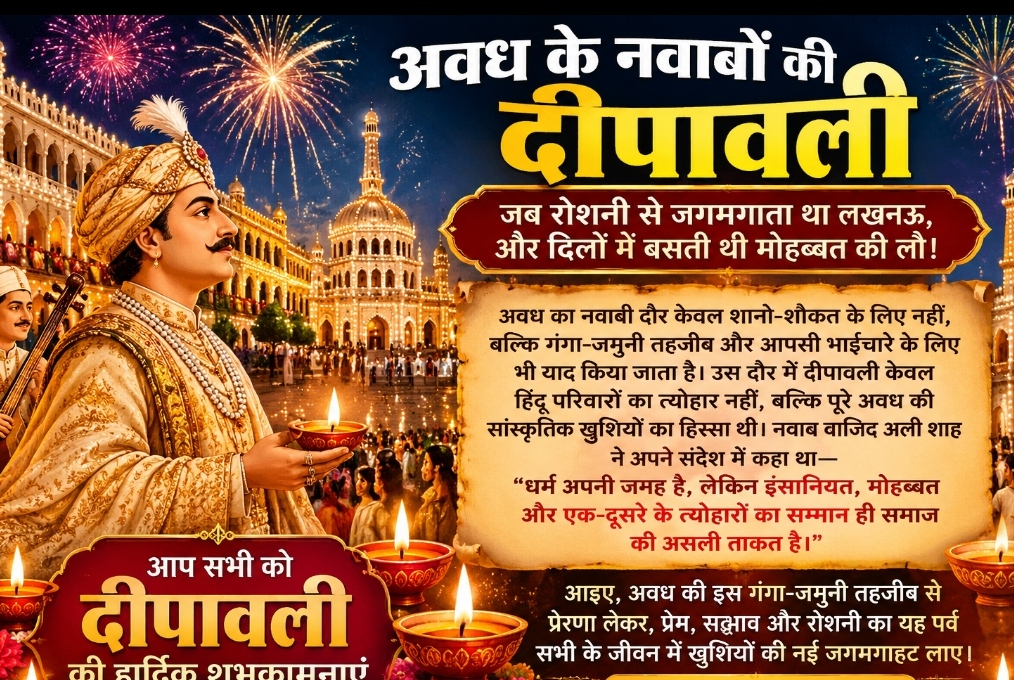
The Nawabi era of Awadh is remembered not only for its royal grandeur but also for its Ganga-Jamuni Tehzeeb, communal harmony, and spirit of togetherness. During that period, Diwali was not merely a festival celebrated by Hindu families; it was also an integral part of Awadh’s shared cultural celebrations. The palaces and royal residences of the Nawabs were illuminated with traditional earthen lamps. Fireworks, sweets, and social gatherings added to the festive spirit.
Nawab Wajid Ali Shah, in particular, had a deep interest in art, music, and Krishna Leela. Under his patronage, theatrical performances based on the lives of Radha and Krishna were also organised.
The message reflected in Nawabi traditions was that while religions have their own identities, humanity, love, and respect for one another’s festivals are the true strengths of society. This was the essence of Awadh’s identity and the beauty of its Ganga-Jamuni Tehzeeb.
Historical Context: Historians and cultural records mention Awadh’s composite culture and Nawab Wajid Ali Shah’s interest in Krishna Leela. However, no authenticated written message specifically issued by the Nawabs to the public on Diwali is currently available. The concluding message of this article represents the spirit of the cultural traditions of that era.