







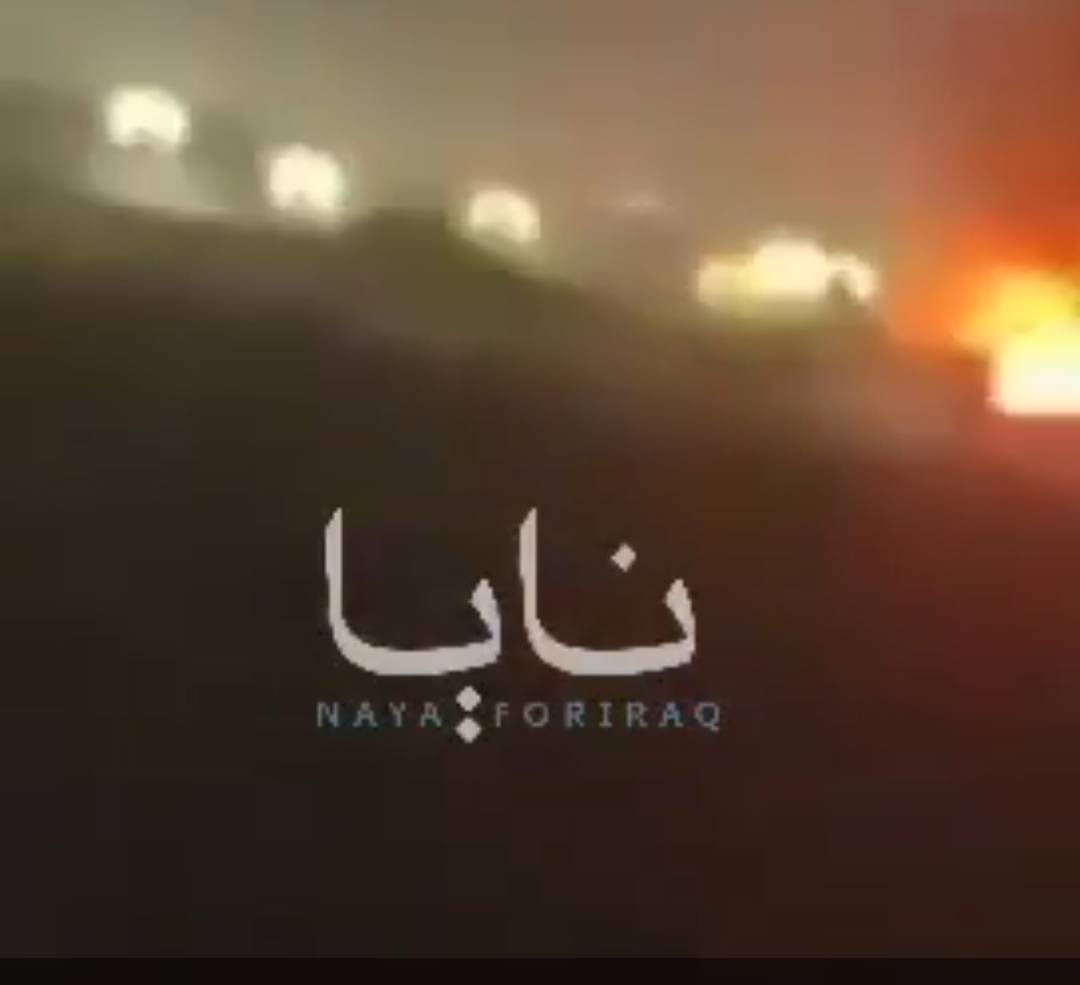
Claims of Another Attack on Iraq After the Fall of Saddam’s Government; Questions Raised Over US-Saudi Action, Security Concerns During Chehlum
Baghdad: Heavy casualties are being reported following alleged joint airstrikes by the United States and Saudi Arabia in Iraq. According to reports, at least 10 fighters belonging to the Popular Mobilization Units (PMU) were killed in Nineveh province, while several others are reported to have been injured.
It is being reported that the United States and Saudi Arabia described these strikes as a retaliatory action in response to attacks on their oil facilities. However, Iraq has denied any involvement in those attacks and stated that its territory will not be allowed to be used for launching attacks against any other country.
The role of the United States in Iraq has remained controversial for many years. Critics claim that the US-led military campaign in 2003 caused widespread destruction in Iraq, ended Saddam Hussein’s government, and pushed the country into a prolonged period of instability. Saudi Arabia has also faced questions over allegations of providing support and bases for US military operations during that period.
Once again, following the alleged attacks in Iraq, several groups have described the action as an assault on Iraq’s sovereignty. The timing of the attack has also raised concerns as millions of pilgrims from around the world are gathering in Karbala to commemorate the Chehlum of Imam Hussain (A.S.). Concerns have been expressed over the security situation.
Groups affiliated with the PMU have condemned the attacks and warned of a possible response. They claim that the action violates international law and Iraq’s sovereignty.
Questions Raised Over Human Rights and International Institutions
Following the attacks, some organisations and leaders have questioned the role of the United Nations and international human rights bodies. They allege that international institutions have failed to effectively prevent military actions by powerful countries.
Tensions in the Middle East May Escalate
According to experts, rising tensions between the United States, Saudi Arabia, and Iran-backed groups could further affect security conditions across the Middle East. Iraq once again appears to be becoming a centre of regional conflict.
— Shabu Zaidi