

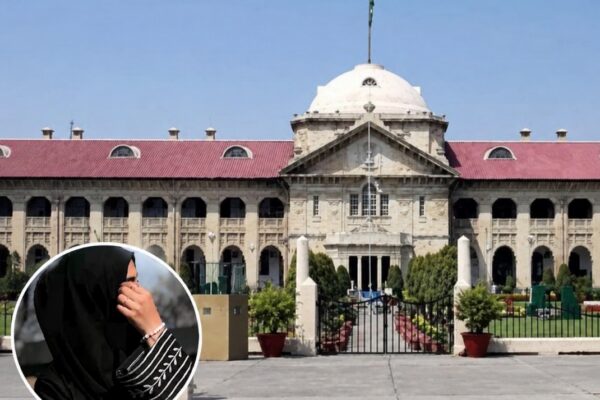





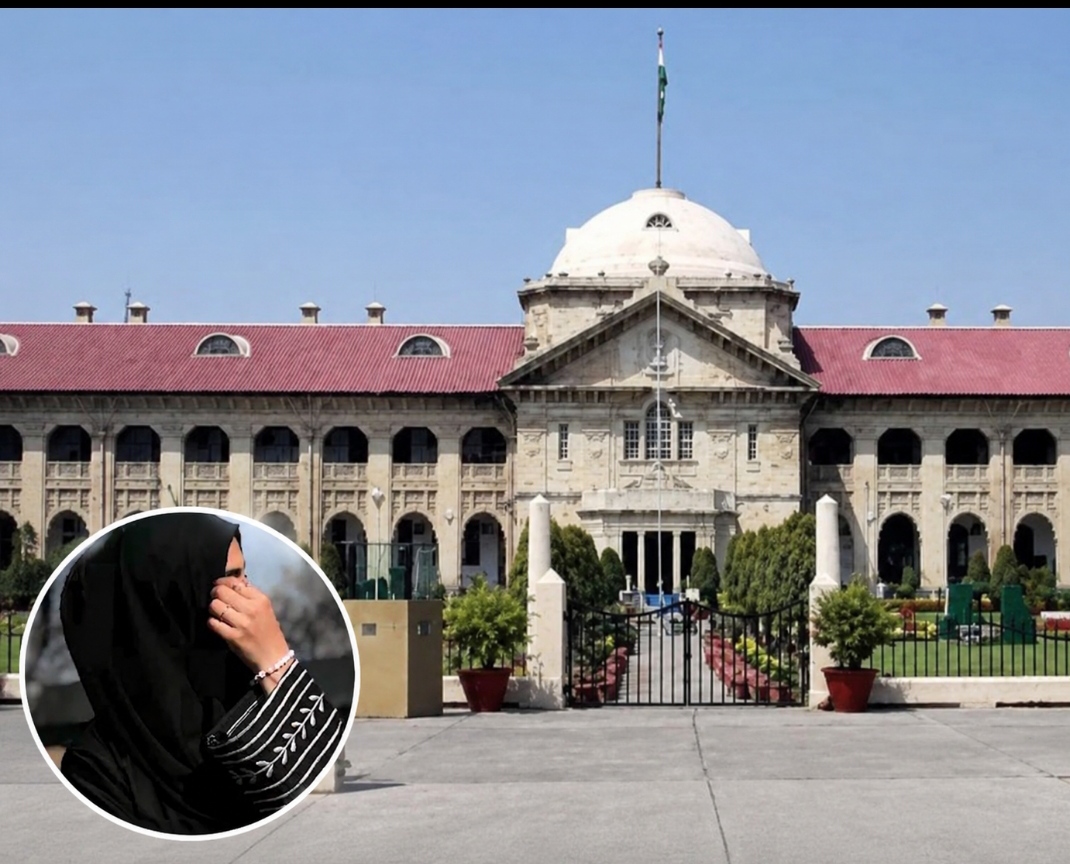
Allahabad High Court’s Hijab Verdict Becomes a National Debate, School Dress Code Upheld as Valid
Allahabad HighPrayagraj | August 25, 2026
The Allahabad High Court’s recent verdict concerning the hijab has become a subject of nationwide debate. The High Court dismissed a petition filed by a minor Muslim student seeking admission to Class 11 at Tagore Public School in Prayagraj, in which she had sought permission to wear a hijab along with the prescribed school uniform.
The case was heard by a division bench comprising Justice J.J. Munir and Justice Indrajit Shukla. The court observed that the student had failed to present sufficient factual or legal grounds to establish that wearing the hijab constitutes an Essential Religious Practice in Islam, the non-observance of which would undermine her religious faith.
The student had argued that she had been attending school with her head covered since her earlier classes and that she was entitled to protection under the constitutional right to religious freedom. However, the court observed that the fact that the school had not objected to her wearing the hijab in earlier classes did not create any permanent or enforceable right to alter the prescribed uniform in the future.
The court also referred to photographs of the school and observed that, apart from the petitioner, no other female student, including students belonging to the same religious community, was seen wearing a headscarf. According to the court, the petition did not contain sufficient material to establish that wearing the hijab is an essential religious practice for Muslim women.
Important Observation by the Court on Dress Code
The High Court observed that a prescribed uniform is not merely a matter of clothing; it also serves the purposes of institutional discipline, equality and maintaining the identity of the school. According to the court, if every student were permitted to modify the uniform according to personal preferences, the authority to maintain the school’s dress code and discipline would effectively shift from the institution to individual students.
The case concerned a private, unaided CBSE-affiliated school. The court also recognised the institution’s right to implement a uniform and non-discriminatory dress code.
Article 25 Cited, But Not Considered Sufficient
The petition invoked constitutional rights relating to religious freedom. It is important to clarify that Article 25 of the Constitution primarily protects freedom of religion, while freedom of speech and expression is protected under Article 19(1)(a).
The Allahabad High Court held that merely claiming a religious practice is not sufficient. The petitioner must establish, through adequate religious and legal material, that the practice in question is actually an essential religious practice of that faith.
Which Earlier Judgments Were Referred To?
The Allahabad High Court considered several earlier judicial decisions concerning the hijab and school dress codes. These included Fathima Tasneem v. State of Kerala, in which the Kerala High Court had given importance to the broader interests of the educational institution over an individual claim.
The court also considered the Fatima Hussain Syed v. Bharat Education Society judgment of the Bombay High Court and the Karnataka High Court’s widely discussed Resham v. State of Karnataka judgment.
In March 2022, a three-judge bench of the Karnataka High Court held that wearing the hijab had not been established as an Essential Religious Practice of Islam entitled to protection under Article 25 of the Constitution. The court also upheld the validity of the school uniform as a disciplinary measure.
Matter Still Pending Before the Supreme Court
In the related Karnataka hijab controversy, a two-judge bench of the Supreme Court—Justice Hemant Gupta and Justice Sudhanshu Dhulia—delivered separate judgments in October 2022. Justice Gupta dismissed the appeals, while Justice Dhulia favoured setting aside the Karnataka High Court judgment and the government order. Because of the difference of opinion, the matter was referred for consideration by a larger bench.
According to the case status available as of August 25, 2026, the matter in Aishat Shifa v. State of Karnataka remains pending and is registered as a three-judge matter. Therefore, the Supreme Court has not yet delivered a final, nationwide authoritative ruling on the broader constitutional issue concerning the hijab.
Therefore, while the Allahabad High Court’s judgment is significant, it would not be legally correct to say that the judgment automatically becomes a final rule applicable across the entire country. If the Supreme Court’s larger bench finally settles the constitutional question, its ruling will be binding on courts across India.
Legal Position in Brief
The Allahabad High Court has refused to grant the student the right to wear a hijab along with the prescribed school uniform, holding that the petition did not provide sufficient material to establish the hijab as an essential religious practice of Islam.
At the same time, the broader constitutional question concerning the wearing of the hijab remains pending before the Supreme Court.